凹版印刷
Gravure Printing
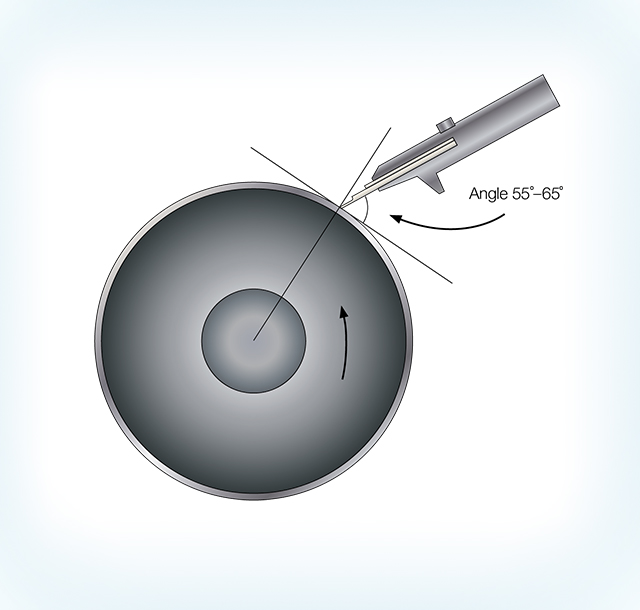
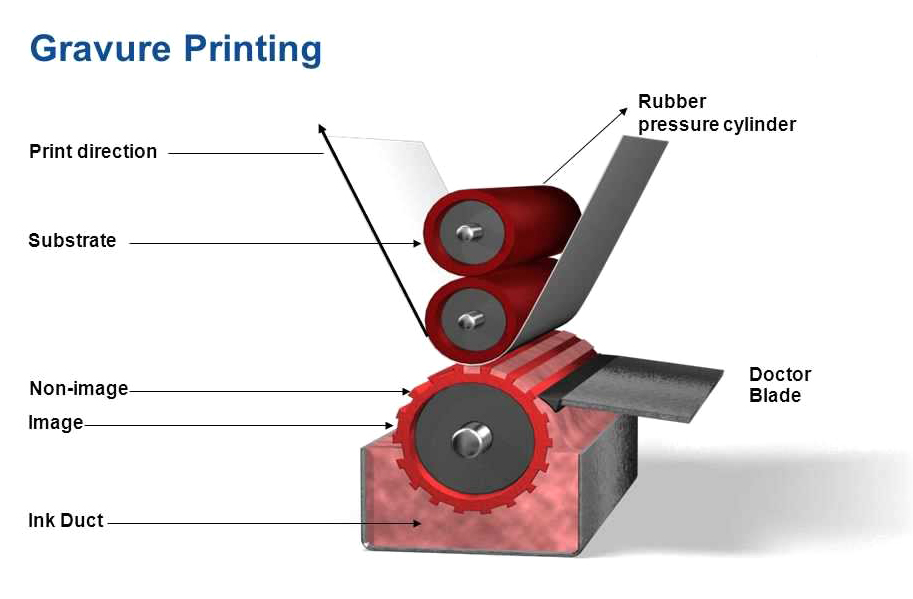
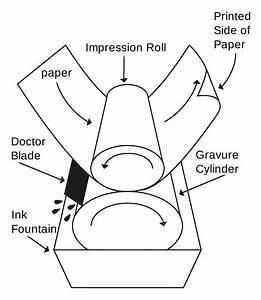
Basics of the Gravure Printing ProcessGravure is small cells recessed into a cylinder that hold ink. The cylinder is washed with ink; a doctor blade removes the excess, leaving ink only in the cells. The ink is transferred to a substrate (paper, plastic, film, and more) using a rotary press. |
 |
Cylinders
Cylinders for gravure have been made in several ways. First came chemical etch, followed by electro-mechanical (diamond cutting) and then laser etching. The latter two use digital images and controls.
Gravure cylinders are extremely long-lasting. They are made of steel, coated in copper for engraving, then finished with chrome. When the cylinder is no longer needed, the chrome and copper can be removed and the steel base reused.
Because of the stable steel bases, gravure cylinders can be quite large. Some publication presses run 3 meter (9.84 feet) wide cylinders. Cylinders can also be extremely small: 16 inches wide or even less. Cylinder diameters can also vary from very small (2.5 inches or 64 mm) to very large (40 inches or 1,016 mm).